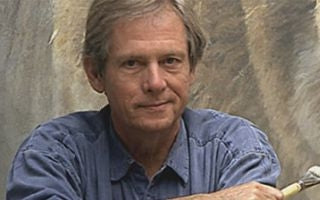
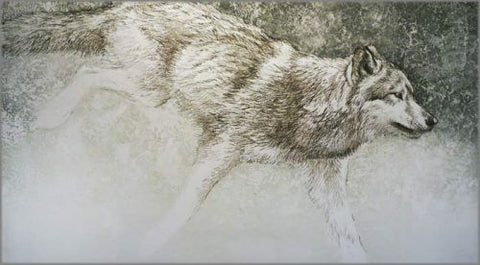
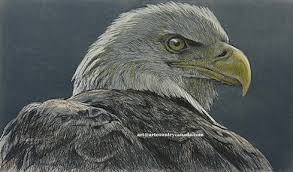
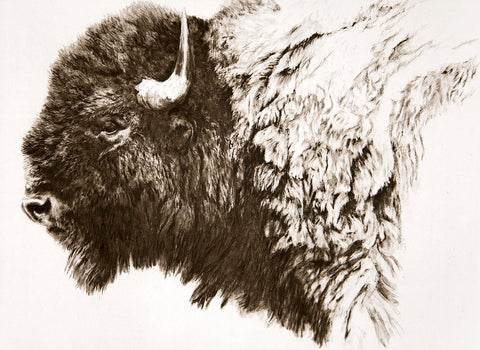
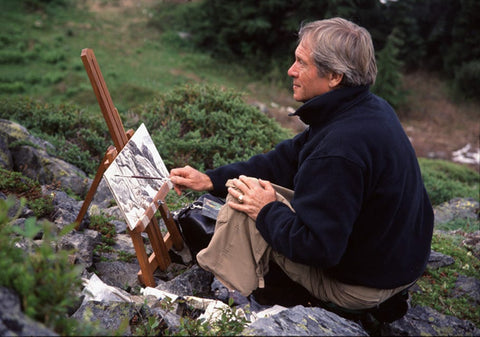
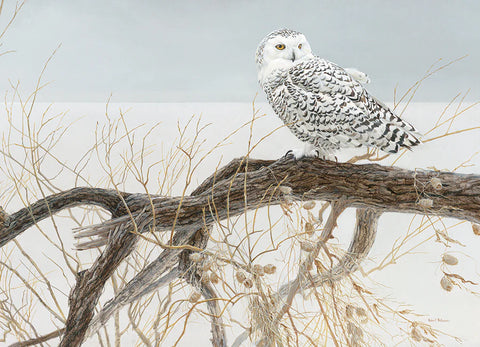
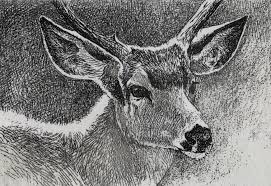
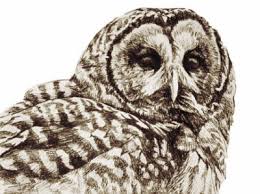
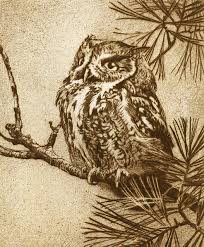
Robert Bateman (b. 1930, Toronto) is an artist, naturalist, teacher, and leading voice for conservation whose realist paintings of wildlife and landscape have influenced generations of viewers. Fascinated by nature and drawing from an early age, he combined his interests by studying geography at the University of Toronto and later teaching high school art and geography for two decades in Ontario and Nigeria.
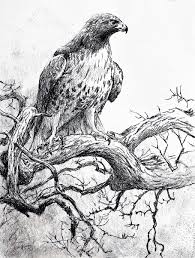
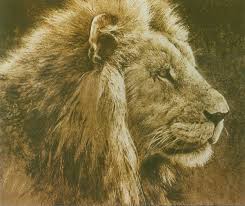
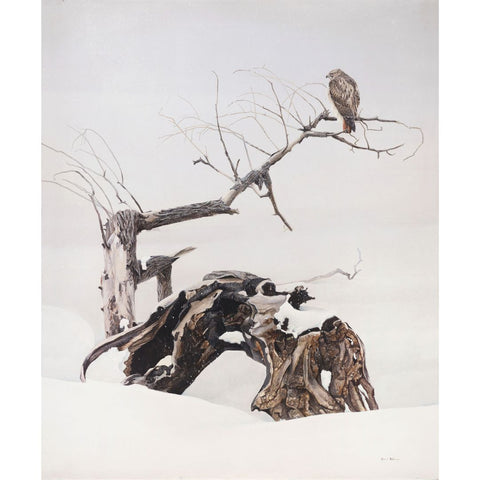
His early artistic explorations included impressionism, cubism, and abstract expressionism, but in his thirties he returned to realism, believing it to be the most honest way to convey the uniqueness and fragility of the natural world. That decision helped define a new standard in wildlife art—one that places animals within carefully observed environments rather than as isolated subjects.
In 1976 Bateman left teaching to paint full-time. From that point on, his art and conservation work became inseparable. His paintings have been exhibited widely, including major one-person shows at institutions such as the Smithsonian’s National Museum of Natural History, the National Museum of Wildlife Art, and museums across Canada, the United States, Europe, South Africa, and Russia. A touring retrospective, The Art of Robert Bateman, travelled throughout North America, and a separate exhibition toured several Russian museums.
Bateman’s images have appeared in numerous best-selling books about his life and art, as well as films and television features. His work is represented in major public collections—including the National Museum of Wildlife Art in Jackson Hole—and in private collections around the world, including those of members of European royal families.
Beyond the studio, Bateman has been an active conservationist since the 1960s. He has lent his name, images, and time to countless organizations and campaigns, helping raise millions of dollars for environmental causes. He has received many honours for his contributions to art, education, and conservation, including the Order of Canada, the Order of British Columbia, the Royal Canadian Geographical Society Gold Medal, and more than a dozen honorary doctorates from universities across Canada and the United States.
In 1985 Bateman and his family moved to Salt Spring Island, British Columbia. Many of his early works and archival materials are now housed at The Robert Bateman Centre in Victoria, a hub for environmental education and art. Through his paintings, writing, public speaking, and foundation work, Bateman is widely regarded as a voice of reason and hope for a renewed human relationship with the natural world.