West Coast Frog Sculpture
Regular price$575.00 CAD Sale price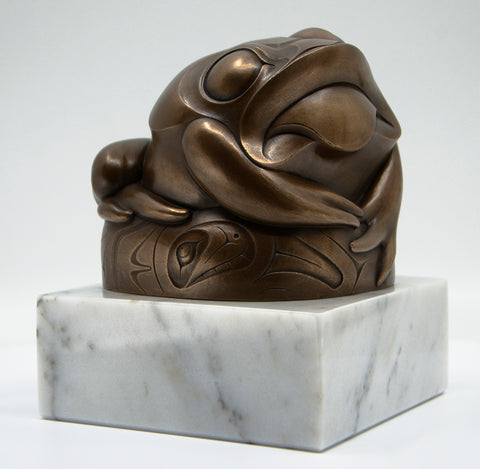
West Coast Frog Sculpture
by Thomas McPhee Sculptor
*Item May Not Be Available - Place on Hold to Inquire About Availability
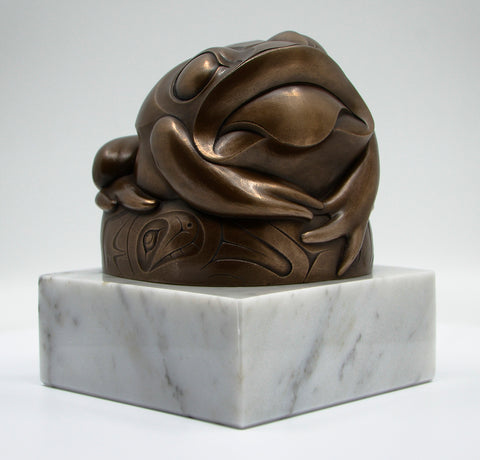
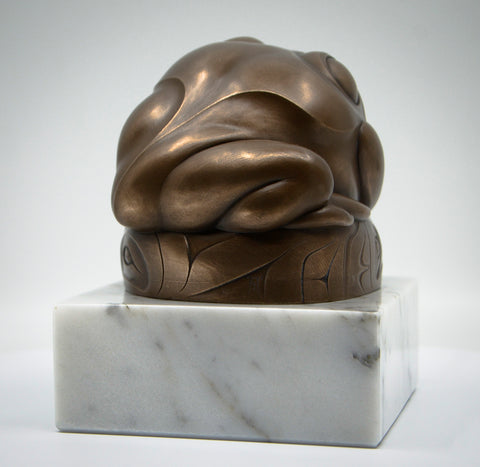
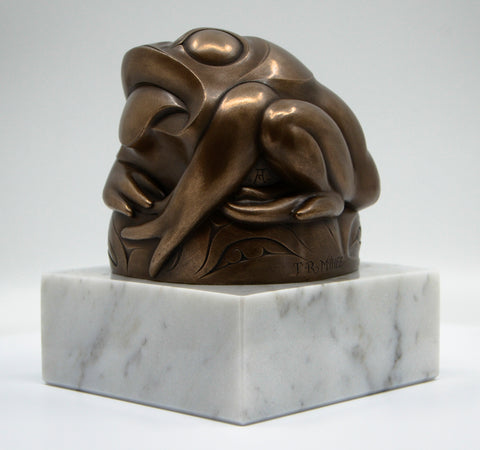
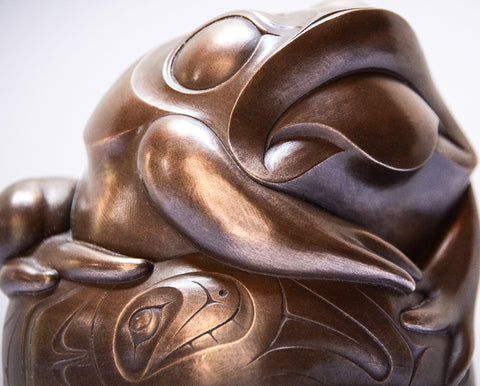
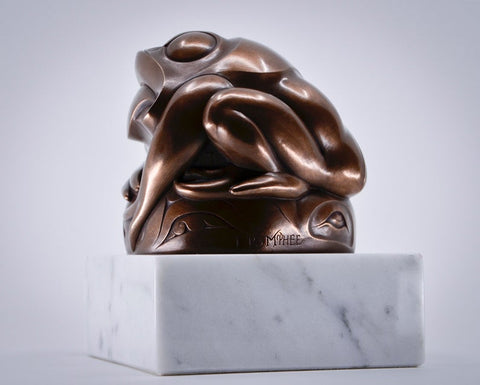
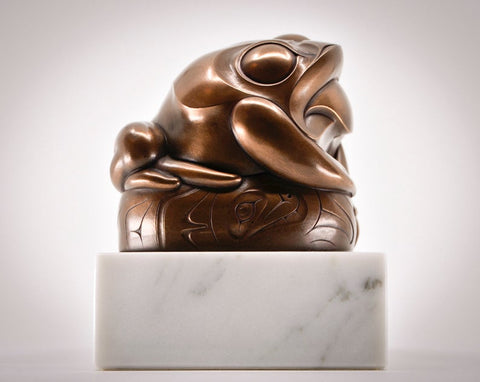
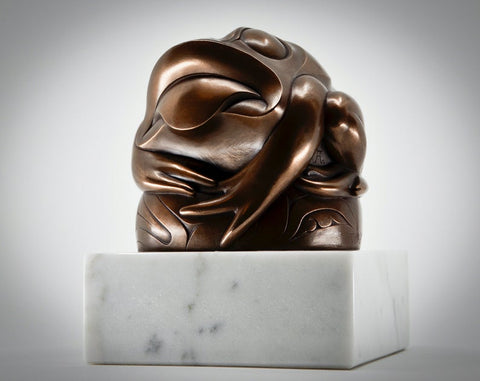
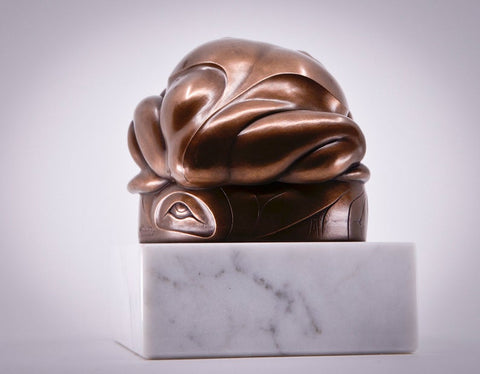
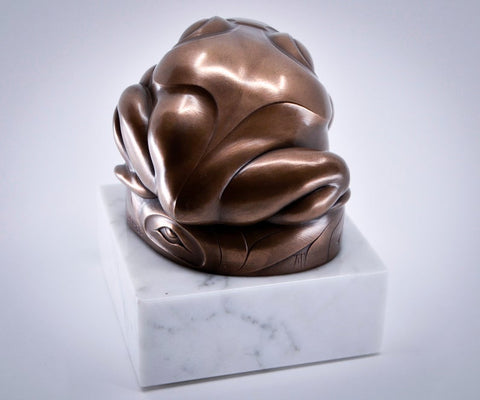
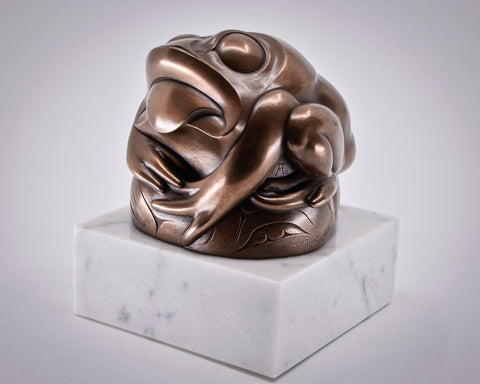
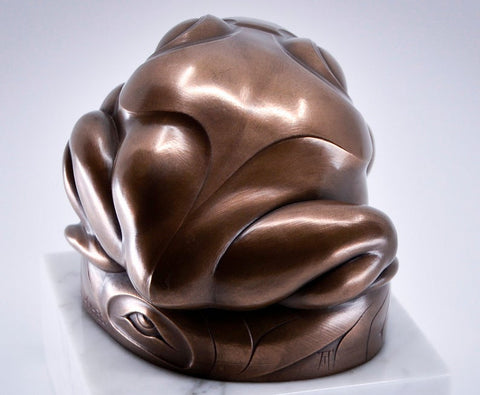
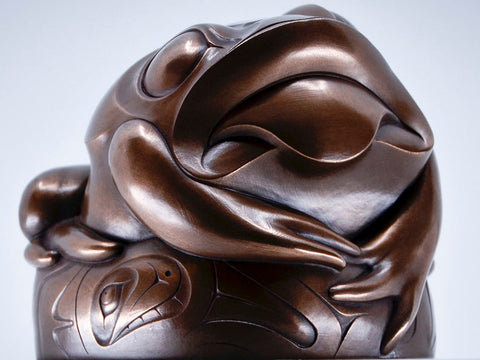
This North West Coast style frog sitting on a marble base is created from cold cast bronze which is made from resin sintered bronze metal powder, also known as 'bonded bronze', then polished to develop a patina with the appearance of hot bronze. Each one is numbered and dated.
This small scale sculpture of a stylized frog was originally carved in Gem Quartz Crystal by Thomas R. McPhee.
Inspired by the myth of the prosperous frog. The frog came to represent wealth and prosperity on the Canadian west coast and is considered to be an omen of fecundity.
This Pacific Northwest Coast style frog sitting on a carrara marble base. Cast in bronze resin then polished to develop a patina with the appearance of hot bronze.
Each one is numbered and dated, cast in the atelier on Salt Spring Island, BC, Canada.
9.5 cm x 7.5 cm x 7.5 cm
Weight: 722 grams (25.45 ounces)

Sculptor Thomas McPhee

Artist Statement
Thomas McPhee
Sculptor Thomas McPhee


McPhee combines classical realism with mythic and archetypal themes, creating small-scale works collected worldwide.


Leave us a Review
For every new review...
We donate complementary cookies to happy hungry puppies.