Lion Head
Regular price$350.00 CAD Sale price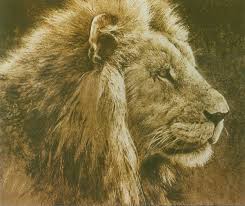
Lion Head
by Robert Bateman Wildlife Artist
10" x 12" Unframed
This is a limited edition litho 104 of 350 of a Lion Head (Sepia) signed by Robert Bateman with the official studio watermark.
"The "king of beasts" is a legend in his own mind. He must be king, and he must fight to prove it. Hunting is essential, but for him it is a sideline left to the females. More oft than not, the lionesses make the kill, and the lion regularly attempts, using his weight and strength, to beat them off the choicest bits. He has to chase and bluff and perhaps attack other males who attempt to move in on his pride of " wives." At times, even mating turns into a battle. But the really serious warfare is against hyenas.
These are the ultimate enemies of all lions. Not as expert at killing for their food, hyenas often even take advantage of a lion kill, and if they significantly outnumber the lions, the hyenas can take over the food. Most lions don't die of old age. When they are too old to keep their place in the pride they become isolated and weaker, and the hyenas seem delighted to finish them off.
This old warrior has participated in uncounted adventures. Each scar marks an event which could have been life-threatening. But the light in his eye shows that he has plenty more life in him yet... if he is lucky."
~ Robert Bateman

Wildlife Artist Robert Bateman

Artist Statement
Robert Bateman
Wildlife Artist Robert Bateman
"If I ever have a conflict between art and nature, I let art win".
Leave us a Review
For every new review...
We donate complementary cookies to happy hungry puppies.